
Block layout
Define the desired pattern and acceptable natural variation with a visual reference.
A substantial butcher-block style starts with a carefully defined construction. We review the timber, block layout, board thickness and assembly requirements before sampling or bulk quotation.
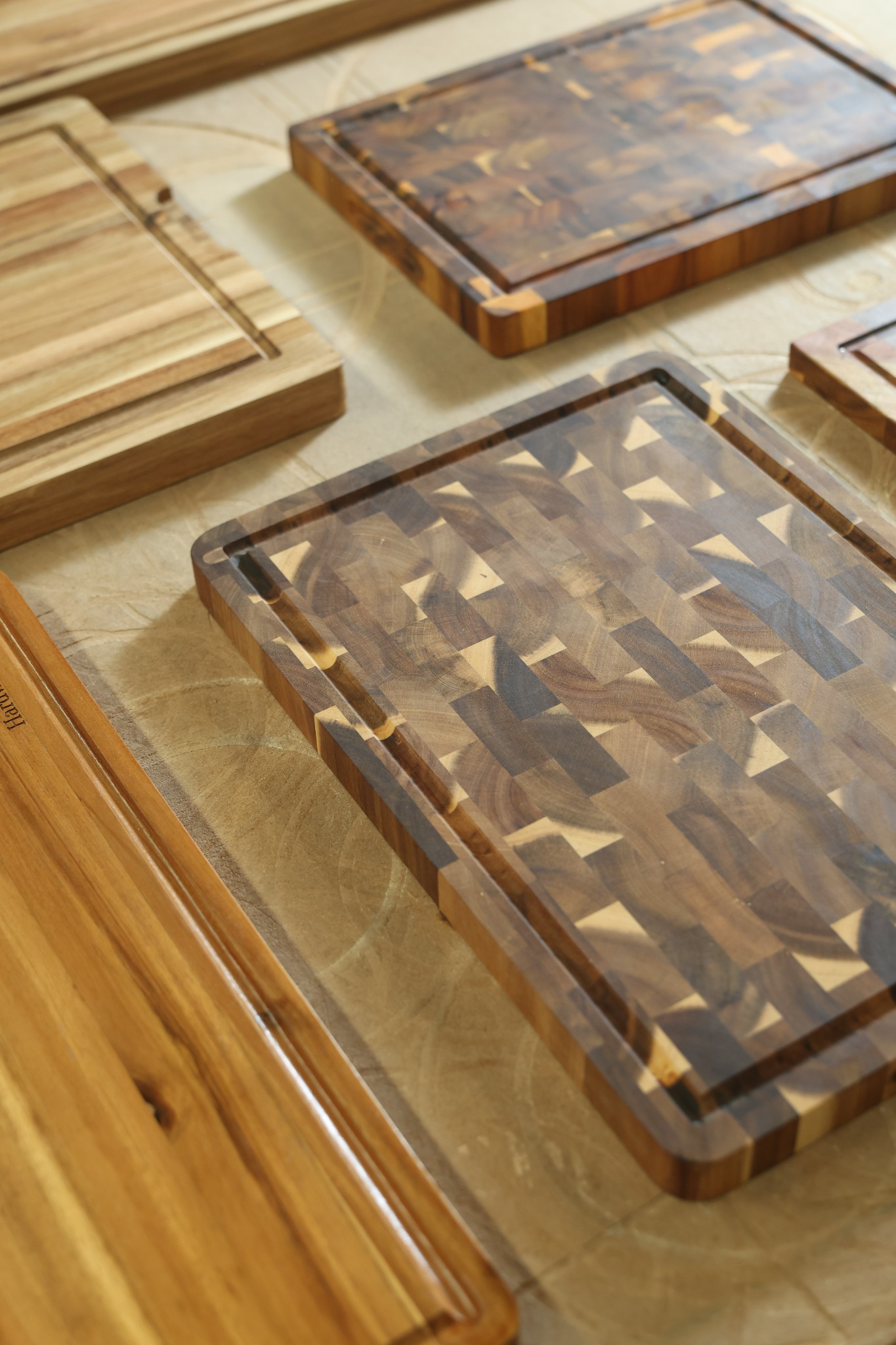
Define the desired pattern and acceptable natural variation with a visual reference.
Specify the complete board dimensions and edge treatment for technical review.
Discuss side grips, grooves and any feet or accessories as part of the design.
Confirm the intended appearance and key details through the agreed sampling process.
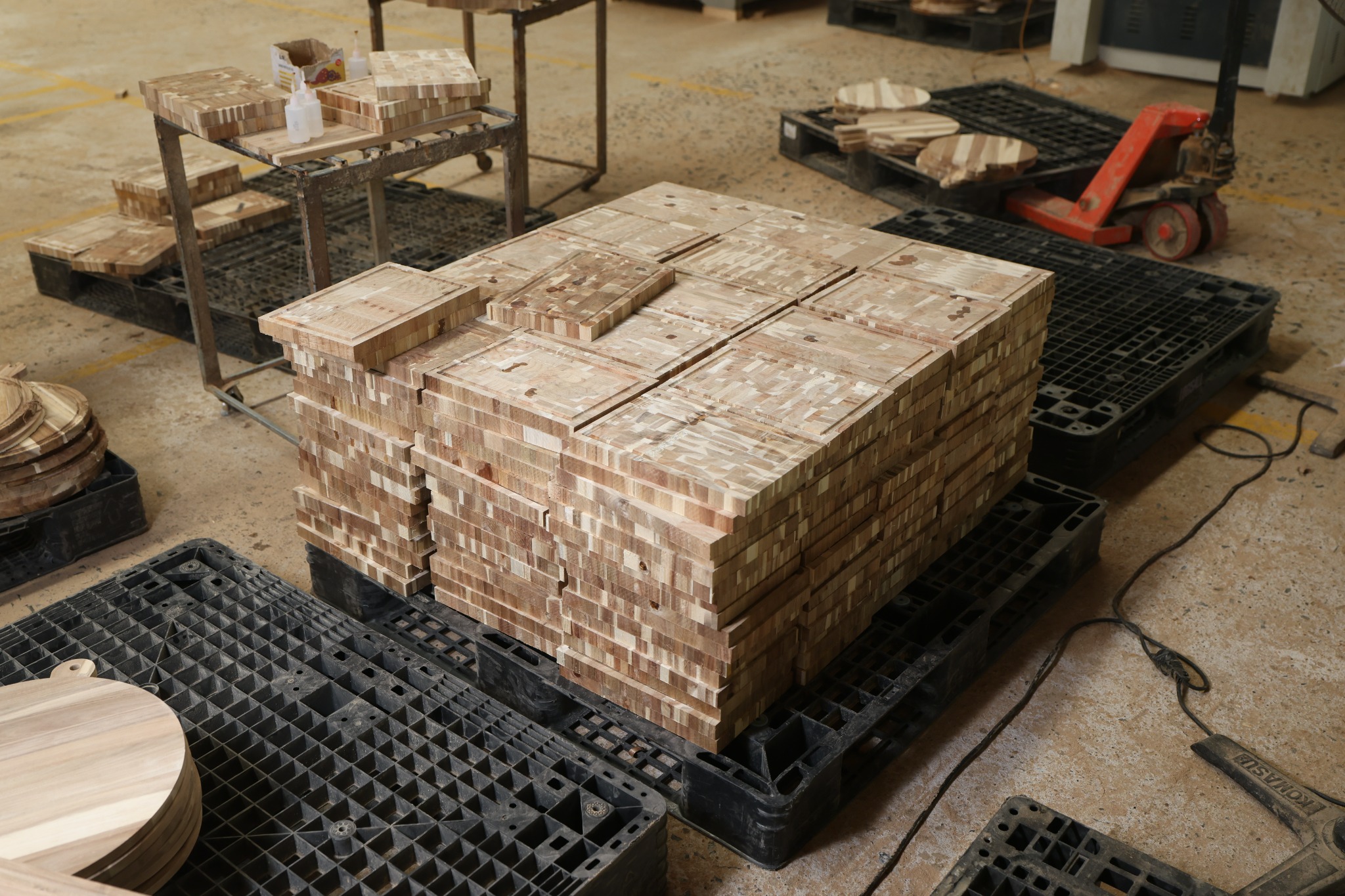
Send your preferred design with dimensions and quantities. The quotation will identify the agreed material, construction, features, marking and packing details.
| Detail | Project options |
|---|---|
| Wood | Acacia or teak, subject to technical review |
| Top surface | End-grain block layout |
| Dimensions | Buyer-specified length, width and thickness |
| Features | Side grips, grooves and packaging as agreed |
The approved sample should define block size, pattern direction and acceptable natural variation.
End-grain construction uses more machining and assembly than a simple face-grain board; dimensions strongly affect cost.
Typical bulk planning starts after sample and artwork approval, with complexity and volume affecting the schedule.
Review laser logo placement, product labels, packaging artwork and carton information together with the board. Your approved specification gives production a common reference.
End-grain construction requires additional cutting, block assembly, gluing, surfacing and finishing. Thickness, block size, pattern and machining details all affect material yield and labor.
No. Natural grain and color vary. The approved sample should establish the intended overall appearance, pattern and acceptable variation rather than promise identical blocks.
Yes, where the board thickness and construction allow. Include groove dimensions, grip geometry and edge profile in the drawing so machining can be reviewed before quotation.
Both can be reviewed, subject to material availability, design, thickness and sample approval.
Provide overall dimensions, target thickness, material, block pattern or reference image, grooves or grips, logo, packaging, quantity per SKU and destination.
End-grain production requires careful block assembly, surfacing and finishing. Establish the intended pattern and acceptable joint appearance before quoting and sampling.
Supply species, overall size, finished thickness, approximate block dimensions and a color/pattern reference.
Show finger grips, juice grooves, handle profiles and all edge details; feasibility depends on construction and thickness.
Agree required construction performance, intended use and any applicable bonding or food-contact evidence for the actual SKU.
Set acceptance criteria for flatness, joints, sanding, dimensions and protective export packing appropriate to the finished weight.
Send your drawing, dimensions and target quantity. We’ll review the specification and discuss a practical route to production.